AI resume builder: how to use AI without sounding generic
How to use an AI resume builder well, with prompts for bullet points, summaries and tailoring to a job, without ending up with a generic resume.
By AiFevo Team ·
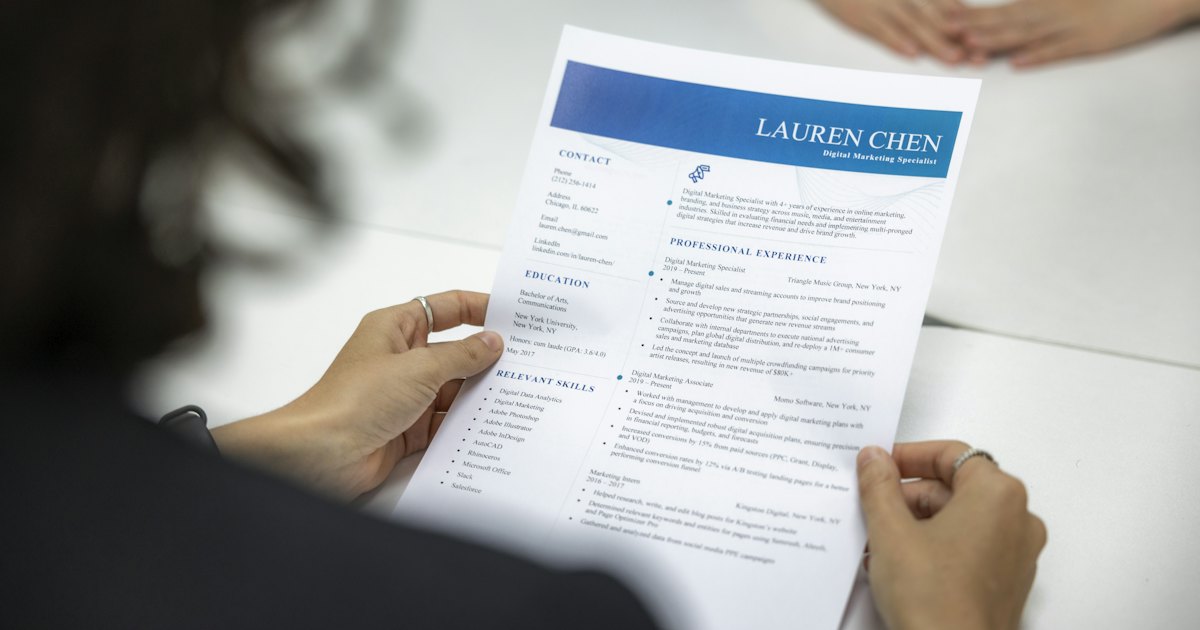
Quick answer: An AI resume builder works best when you treat it as an editor, not a writer. Give it your actual achievements and numbers, ask it to turn weak bullet points into strong ones, and have it tailor the summary to a specific job description. The result should still sound like you, with details only you could know, not a generic template with your name on it.
An AI resume builder works best when you treat it as an editor, not a writer. Give it your actual achievements and numbers, ask it to turn weak bullet points into strong ones, and have it tailor the summary to a specific job description. The result should still sound like you, with details only you could know, not a generic template with your name on it, and you can do all of this with any capable AI model, including the ones in AiFevo.
Start with your own facts, not a blank prompt
The biggest mistake people make with AI resume help is asking for a resume from scratch. A model with no information about you will invent plausible-sounding but generic achievements. Instead, give it your real history first:
“Here are my rough notes on my last job: managed a team of 4, cut onboarding time from 3 weeks to 10 days, ran weekly client calls. Turn these into three strong resume bullet points, each starting with an action verb and including a number where possible.”
Turning weak bullet points into strong ones
Most resumes are full of vague lines like “responsible for managing projects.” AI is genuinely useful here, as an editor rather than a generator:
“Rewrite this bullet point to lead with the result, not the task: ‘Responsible for managing the social media accounts.’”
A good result ties the task to an outcome: “Grew social media following by [your real number] over six months through a consistent posting schedule.” If you don’t have a number, it’s fine to say so and keep the bullet qualitative rather than inventing one.
Tailoring to a specific job
A resume that’s tailored to the role it’s applying for performs better than a generic one sent everywhere. Paste the job description and ask for a comparison:
“Here’s a job description and my current resume summary. What skills from the job description am I not highlighting? Suggest how to adjust my summary, without inventing experience I don’t have.”
That last clause matters. Always add it, because an AI model trying to be helpful will sometimes suggest skills or phrasing that oversells what you’ve actually done.
A simple workflow
| Step | What to ask for |
|---|---|
| 1. Gather | List your real achievements and numbers, in your own words |
| 2. Strengthen | Ask AI to rewrite weak bullets to lead with results |
| 3. Tailor | Compare your resume against a specific job description |
| 4. Trim | Ask for the three weakest lines to cut, for length |
| 5. Proofread | Ask for a final pass for clarity and consistency, not content |
Writing a cover letter to match
The same honest approach applies to a cover letter: give the model your real reasons for wanting the role, not a blank request.
“Write a cover letter opening for this role. Context: I’m applying because I’ve used their product for two years and have specific ideas for [area]. Make it sound like a real person, not a template.”
For more on getting AI to sound like you rather than generic, see our guide to AI for writing and research, which covers matching your own voice in more detail.
What to avoid
Don’t let AI invent achievements, skills or numbers you don’t have. Interviewers ask follow-up questions, and a resume line you can’t back up in person is worse than a plainer one you can. Also avoid sending the exact same AI-polished resume to every job without tailoring it, since generic applications tend to perform worse than ones that clearly respond to the specific role.
Preparing for the interview that follows
A resume’s job is to get you the interview, not to answer every question on its own, so it’s worth using AI for interview preparation too, once your resume and application are sent. A useful prompt treats the model as a practice interviewer:
“Based on this job description, ask me five likely interview questions, one at a time. After each answer I give, tell me what was strong and what I should add.”
This extends the same honest-editor approach from your resume to your interview answers: the AI sharpens what you actually say, rather than scripting answers for you to memorise and recite.
Frequently asked questions
Will using AI make my resume sound like everyone else’s?
It can, if you let it write from scratch with no input from you. The fix is giving it your real achievements and numbers first, and asking it to strengthen your own words rather than generate new content. A resume built from your actual history will always sound more specific than a generic AI draft.
Can AI help me if I don’t have strong numbers to show?
Yes. Ask it to focus on scope and outcome instead: what you were responsible for, what changed because of your work, and who it affected. Not every achievement needs a percentage to be convincing.
Should I use the same AI model for my resume and cover letter?
Either works, but a model known for careful, structured writing, such as Claude, often suits a cover letter well, while a general-purpose model works fine for punchy resume bullet points. In AiFevo you can try both without leaving the conversation.
Can AI check my resume against a job description automatically?
You can paste both into the chat and ask it to compare them directly, pointing out gaps and suggesting which of your existing skills to foreground. It won’t score you numerically in any meaningful way, but a side-by-side comparison is genuinely useful.
Is it okay to tell an employer I used AI to help write my resume?
Most employers care more about whether the content is accurate and well-presented than how you drafted it. What matters is that everything on the resume reflects your real experience, since that’s what you’ll be asked about in an interview.
Build a resume that still sounds like you
Start with your real achievements, not a blank prompt. Start free on AiFevo and try the bullet-point rewrite prompt above with your own notes. See ChatGPT prompts that actually work for more on writing a good brief, best AI for writing for choosing a model, and pricing for plan details.